Buying Diamond Earrings: The Complete Guide 2027

Diamond earrings are the most timeless and elegant piece of jewelry imaginable. A pair of diamond stud earrings brightens any face, matches absolutely any outfit, and is a lifelong companion that never goes out of style. But there are pitfalls when buying diamond earrings: What do the 4 Cs mean for earrings? How big should the stones be? And what is the difference between real diamonds, moissanite, and cubic zirconia? This comprehensive guide explains everything.
Why Diamond Earrings are the Best Jewelry Investment
Unlike fashion jewelry, which becomes outdated after one season, diamond stud earrings are absolutely timeless. They go with a T-shirt and jeans just as well as with an evening gown, look professional in the office, and glamorous at a wedding celebration. Once purchased, they will be worn for a lifetime. This makes them one of the best jewelry investments ever – both emotionally and financially.
The 4 Cs of Diamond Earrings
The same quality criteria apply to diamond earrings as to engagement rings. However, for earrings, the priorities need to be weighted somewhat differently:
Cut – Priority No. 1
The cut determines the sparkle. For earrings: at least "Very Good," preferably "Excellent" or "Ideal." A poorly cut diamond, even with the best color and clarity, will still appear dull. For earrings (where the stone is usually seen from a distance), an excellent cut is even more important than for a ring, as inclusions are hardly noticeable from a distance.
Color – Priority No. 2
For earrings, compromises can be made regarding color. While D–F is often aimed for in an engagement ring, G–H is perfectly sufficient for stud earrings – the difference is barely noticeable from arm's length, but the price difference is significant. In a yellow gold setting, you can even use I–J, as the gold masks the slight yellow tint.
Clarity – Priority No. 3
For earrings: VS2 to SI1 is the sweet spot category. Inclusions in this category are not visible to the naked eye (eye-clean), but the price is significantly lower than FL or VVS. SI2 can be acceptable if the inclusions are not in the center of the stone.
Carat – Priority No. 4
For stud earrings, size is specified in "Total Carat Weight" (TCW) – the sum of both stones. Popular sizes:
- 0.20–0.30 ct TCW: Very discreet, ideal for everyday wear (0.10–0.15 ct each)
- 0.40–0.60 ct TCW: The most popular size – visible, but not exaggerated (0.20–0.30 ct each)
- 0.80–1.00 ct TCW: Statement studs for special occasions (0.40–0.50 ct each)
- 1.00 ct+ TCW: Luxury studs for maximum impact
Real Diamonds vs. Moissanite vs. Cubic Zirconia
Real Diamond
Naturally formed, hardest material (Mohs 10), unique value. The first choice for favorite daily wear earrings and investment jewelry. Prices start from approx. €500 for a pair of good 0.40 ct TCW studs.
Lab-Grown Diamond
Chemically and physically identical to natural diamonds, but grown in a laboratory. 50–70% cheaper for the same quality. For ethically conscious buyers and anyone who wants real diamond sparkle for less money, this is the absolute best option.
Moissanite
Silicon carbide, naturally found in meteorites, now synthetically produced. Hardness 9.25. Breaks light more intensely than diamond (more "fire"). Very inexpensive in comparison (€80–200 for 0.50 ct TCW). For anyone who wants maximum sparkle without a large budget.
Cubic Zirconia (CZ)
The cheapest option. Looks like diamond but is significantly softer (Mohs 8–8.5) and can dull over time. Perfectly sufficient for occasionally worn earrings and fashion jewelry.
Settings for Diamond Stud Earrings
- Prong Setting (4 or 6 prongs): Maximum visibility of the stone from all sides. The most classic diamond stud. The Tiffany setting (six slender prongs) is iconic.
- Bezel Setting: Stone is completely enclosed by metal. More secure for active wearers, better protects the stone. Modern look.
- Martini Setting (3 prongs): Three slender prongs, very low profile. Sits particularly close to the earlobe.
Which Metal for Diamond Stud Earrings?
- Platinum: The most noble metal for diamonds. Hypoallergenic, very durable, shines like a diamond. Most expensive option.
- White Gold 585/750: Visually like platinum, less expensive. Rhodium plating protects. Best price-quality choice.
- Yellow Gold 585: Classic and warm. Particularly beautiful for warm skin tones and with stones in G–I color.
Security: Choosing the Right Clasp
For valuable diamond stud earrings, the clasp is crucial:
- La Pousette (Safety back): The most secure for valuable pieces. Opens only with intentional pressure.
- Screw-Back: Screwed on, very secure. A little trickier to put on.
- Standard Butterfly-Back: Sufficient for smaller, less expensive studs. For values over €500, an upgrade is recommended.
Prices for Diamond Earrings: What is Realistic?
- 0.20 ct TCW, VS1, G, White Gold: approx. €400–700
- 0.50 ct TCW, VS2, G-H, White Gold: approx. €1,000–2,000
- 1.00 ct TCW, SI1, F-G, Platinum: approx. €3,000–6,000
- Moissanite 0.50 ct TCW, White Gold: approx. €150–300
- Lab-Grown Diamond 0.50 ct TCW, White Gold: approx. €500–900
Sparkling Earrings at Corelune Jewellery
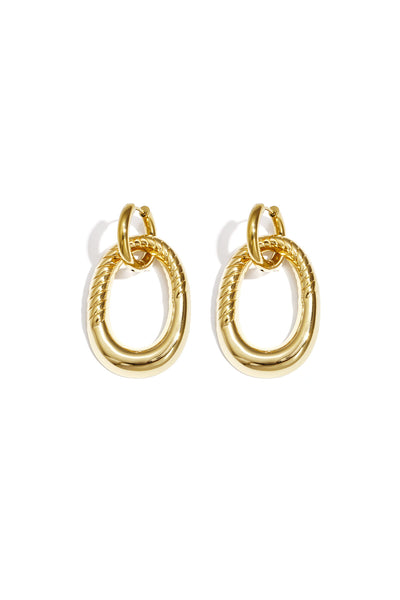
From discreet everyday studs to glamorous statement earrings – at Corelune Jewellery, you'll find sparkling earrings for every occasion.
👉 Discover earrings now – and shine with every look!