Layering necklaces: How to achieve the perfect look – the honest guide
Wearing two or three chains layered sounds simpler than it is. In theory: just put on several chains. In practice: one looks good, another is distracting, a third disappears into the outfit, and together it looks like three randomly stacked pieces instead of a thoughtful look.
Good layering is not an accident or a talent you either have or don't. There are three principles that almost always work – and a few mistakes you should know to avoid them.
Principle 1: Length Hierarchy
The most important principle in chain layering is also the simplest: each chain needs a noticeably different length. The rule of thumb is a distance of at least 3 to 5 centimeters between the chains.
A classic three-chain combination could look like this: 42 cm (close to a choker, sitting just below the collarbone), 46 to 48 cm (standard length, on the sternum), 55 to 58 cm (longer chain, visibly lower). Each chain is clearly on its own level – they visually overlap, but not literally.
What doesn't work: two chains of 45 and 47 cm in length. The two-centimeter difference is almost imperceptible on the skin – both chains seem to lie at the same height and appear as a messy group, not a deliberate look.
Principle 2: Thickness Contrast
The most beautiful layerings play with different chain widths. A mix of a very delicate piece (0.8 to 1 mm), a medium one (1.5 to 2 mm), and a bolder one (3 to 4 mm or a pendant piece) creates visual depth. Three chains of identical thickness, however, look monotonous, even if the lengths vary.
This also applies to the structure: a smooth Venetian chain next to a slightly textured anchor chain next to a piece with a pendant or decorative element – this variation in texture and richness of detail makes a layered look vibrant.
Principle 3: Metal Consistency
In a layering, the metal should be consistent – or consciously contrasting, not randomly mixed. The two effective approaches:
Monochromatic: All chains in the same gold color. Yellow gold on yellow gold, white gold on white gold. Appears harmonious, elegant, has a natural coherence. Particularly suitable for simpler styles.
Deliberate Contrast: Yellow gold combined with white gold or silver. This works if applied as a principle – for example, the longest chain in silver, the others in gold. It looks modern and less conventional. What doesn't work: a gold, a silver, and a rose gold chain, without a clear relationship being apparent. That looks indecisive.
The Anchor Pendant: How One Piece Structures the Layering
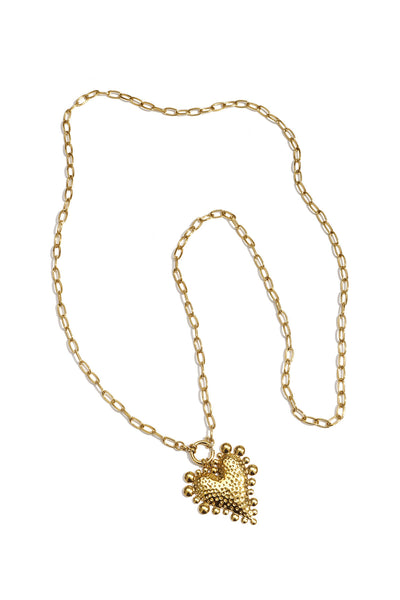
A pendant – a simple cross, a small stone, a geometric motif – gives a layering a visual anchor. It's the point to which the eye returns. This makes the ensemble less random.
The optimal position for the pendant piece: usually in the middle of the length hierarchy, i.e., at the 46 to 50 cm level. The shorter chain frames it above, the longer one provides depth below. The pendant itself should not be too large – it should anchor, not dominate.
Which Outfits Allow Layering – and Which Don't
Layering works best with low necklines: V-neck, round neck, or wide collar give the chains the space they need. The deeper the neckline, the more layers can be visually accommodated.
Turtlenecks and high-necked blouses leave little room for layering. Here, a single chain that falls slightly over the collar is more effective than an invisible layering underneath.
Shirts and blouses with collars: The chains can be worn over the collar, creating a deliberate contrast. This requires some courage, but if the chains are clearly structured and match the collar's characteristics, it looks thoughtful rather than overdone.
The Most Common Mistakes in Chain Layering
Too many chains at once: Three is the comfortable upper limit. Four or more require very precise coordination and a more experienced eye for proportions.
Chains that tangle: This happens particularly between delicate chains of different materials. A delicate and a medium-weight chain usually wear without conflict. Two very delicate chains of similar length are at risk. Remedy: slightly different surfaces (one smooth, one slightly textured) and sufficient length spacing.
Pendant on the wrong level: A very large pendant on a very short chain dominates the décolleté. It has no room downwards. Heavy or larger pendants need more length – 50 cm and more – so they can fall freely and unfold.
Which Chains to Start With
You don't need a collection of chains to start layering. Three pieces are enough as an entry point: a very delicate chain at 42 cm (anchor chain 1 mm or Venetian chain), a classic chain of medium thickness at 46 to 48 cm, and a piece with a pendant or more presence at 55 to 58 cm. These three work together in almost any combination.
The gold chain collection at Corelune offers all common lengths and chain patterns in 585 gold – with length and weight specifications so you know exactly what you're ordering. If you're unsure about combining, you'll also find curated chain sets that are coordinated.
→ Further articles: Wearing a gold chain daily: What you need to know | Which gold color suits your skin tone?
Frequently Asked Questions About Chain Layering
Can you layer silver and gold together?
Yes, if done deliberately. The mixed-metals principle works when one metal dominates and the other acts as an accent – for example, two gold chains and one silver chain with a pendant. What doesn't work: a random mix without a discernible relationship.
How do I prevent my chains from tangling?
Sufficient length spacing (at least 3 to 5 cm), different chain widths, and a slight weight difference between the chains significantly minimize the risk of tangling. Very delicate chains of similar length are more prone – here, a more robust chain as a counterpart helps.
How many chains are the right number for layering?
Two is the easiest start – clear length contrast, minimal risk. Three is the classic layering, most commonly seen and offering the most flexibility. Four or more chains require a very good eye for proportions and a clear idea of which piece should dominate.
Should all chains in layering have the same quality?
Not necessarily the exact same – but a similar quality level helps. Real gold next to a piece whose plating has already flaked off detracts from the entire ensemble. If investing, it's worth investing in all pieces of a layering, not just the most expensive one.