Layering necklaces in summer: The 3-layer formula – and how to untangle them
Wearing multiple necklaces at once – it always looks effortless in photos. In practice, everything gets tangled after three hours, or the lengths just don't match, and the look appears haphazard instead of curated. Layering necklaces isn't magic, but it has a logic – and once you understand it, you'll never leave the house with just one necklace again. This guide shows you the 3-layer formula, the best anti-knot hack, and why summer is the ideal time for necklace layering.
Why Summer is the Best Time for Necklace Layering
In winter, turtlenecks and scarves usually hide jewelry. But in summer, something beautiful happens: camisoles, V-necks, and off-the-shoulder dresses actually give necklaces space. The proportion between the neck, décolletage, and the individual necklace layers becomes visible – and that's precisely what makes layering so effective.
On tanned skin, gold jewelry also appears more intense than on pale winter complexions. The contrast between warm gold tones and summer skin is one of the main reasons why this look explodes on social media in June and July – and why you should try it now.
The 3-Layer Formula: The Foundation of Every Good Layering Look
Almost all professionally styled necklace layering looks are based on the same three layers. You don't need ten necklaces, expensive individual pieces, or styling talent – just an awareness of these three roles.
Layer 1 – The Base (35–42 cm): Frame and Foundation
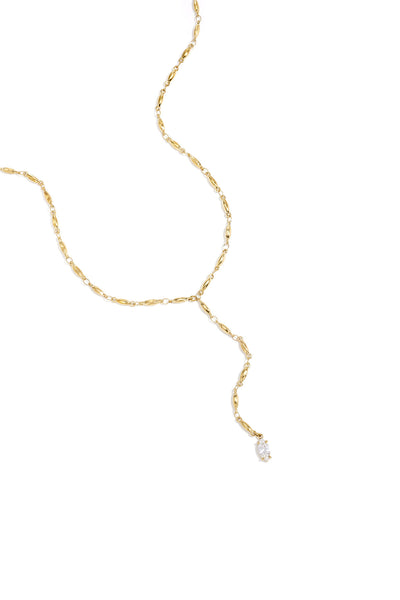
The shortest necklace sits close to the neck, on or just above the collarbone. It defines the upper edge of the look and is often the most subtle of the three layers. Ideal are slender, structured necklaces – a delicate cable chain or a thin link chain 1 to 1.5 mm thick. The base necklace should frame the neck, not dominate.
For summer: A 38- to 40-cm necklace pairs well with camisoles and T-shirts. For a deep V-neck: preferably 40–42 cm, so it doesn't disappear into the fabric.
Layer 2 – The Middle (44–52 cm): The Actual Look-Bearer
The middle necklace rests on the breastbone and builds the visual V-shape of the layering. This layer is often the most important – it gives the look its character. Here, texture contrast to the base necklace is crucial: if layer 1 is a delicate, smooth chain, layer 2 can be a link chain with more volume, or a chain with a single small pendant.
Distance to the base: at least 4 to 5 cm. Less, and the necklaces will look like one wide necklace instead of two independent layers.
Layer 3 – The Focus (54–65 cm): Statement or Quiet Finish
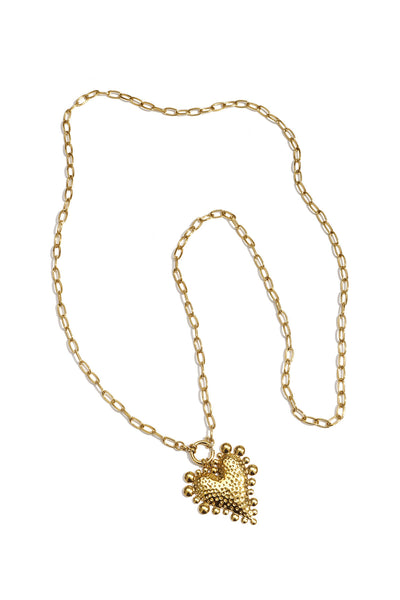
The longest necklace hangs deep into the décolletage or on the chest. For summer with a deep neckline or strapless pieces: ideal. This layer can make a statement – a prominent pendant, a wider chain – or it can remain simple and add depth to the look without overpowering it.
Rule of thumb: If layer 3 is a statement necklace, layers 1 and 2 remain subtle. If layer 3 is simple, layer 2 can show more character.
Necklace Lengths by Neckline: The Table You Need
The same layering looks completely different depending on the neckline. Here are the adjustments:
| Neckline | Layer 1 (Base) | Layer 2 (Middle) | Layer 3 (Focus) |
|---|---|---|---|
| Crewneck | 38–40 cm | 44–47 cm | 52–58 cm |
| V-Neck | 40–42 cm | 46–50 cm | 55–65 cm |
| Camisole / Tank Top | 38–42 cm | 46–52 cm | 56–65 cm |
| Off-the-Shoulder Dress | 40–45 cm | 48–52 cm | 58–65 cm |
For a crewneck: The base necklace must be shorter than the neckline so that it remains visible. For a V-neck: The lower necklace follows the V-line and enhances the look – this is one of the most beautiful effects in summer layering.
Texture and Contrast: What Makes the Look Alive
Three identical necklaces in different lengths don't look like layering – they look like they were accidentally ordered threefold. Contrast in texture is what distinguishes a good layering look from an unsuccessful one.
The simplest formula for texture contrast: delicate + structured + focus. A smooth, narrow chain as the base. One with recognizable links or a slightly stronger thickness as the middle. One with a pendant or a different link shape as the bottom layer. This creates the visual tension that the look needs.
Metal mixing – yellow gold with rose gold, or gold with silver – is possible if one metal dominates and the other is an accent. Two or three different metals in equal proportions: that looks accidental, not curated.
The Tangling Problem: Why It Happens – And the One Hack
Necklaces tangle because they move around the neck when worn – especially if they are of different lengths and weights. Light chains wander; heavy chains remain more stable. The simplest anti-knot effect: The longest and heaviest chain at the bottom, the finest and lightest at the top.
The carabiner hack works like this and is actually very effective: Place both necklaces around your neck, but don't close chain 1 with its own eyelet – instead, use the carabiner of chain 2. And vice versa: close chain 2 with the carabiner of chain 1. The chains are now connected at the nape of the neck and move as a unit. The effect: They can no longer shift against each other and thus won't tangle.
Two additional factors that reduce tangling: Different chain thicknesses (a 1-mm chain and a 2-mm chain tangle less than two of the same thickness). And chains with pendants tangle less often because the weight of the pendant pulls the chain down and stabilizes it.
Material in Summer: Why the Choice Matters More Than You Think
In summer, jewelry comes into intense contact with two things: sweat and sunscreen. This is a serious strain for cheaply gold-plated brass jewelry – the coating wears off faster, and if two chains of different materials rub against each other, it can cause galvanic reactions: the surfaces oxidize at the contact points.
Therefore, material uniformity is important for layering. If all chains are made of 316L stainless steel with PVD gold plating, none of the chains will react with each other – the material is chemically inert, even if the chains touch all day. No tarnishing, no greenish shimmer at the contact points, no loss of gold plating due to abrasion between the layers.
This is one of the main reasons why layering with high-quality 316L chains looks good for weeks, while the same look with cheap brass jewelry is disappointing after the first day at the beach.
The Starter Set: Three Necklaces That Instantly Match
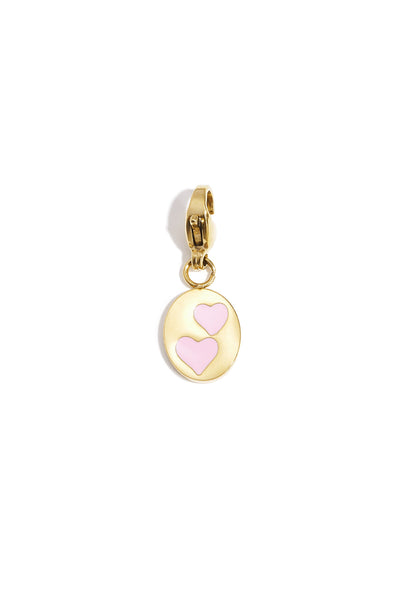
If you haven't layered before and don't know where to start, you need three things: a delicate chain 38–40 cm long, a link chain or structured chain 44–48 cm long, and a chain with a small pendant 54–60 cm long. All three in yellow gold, all three made of the same material (ideally 316L + PVD). The starter set works with almost any summer outfit, can be worn individually, and combined with each other.
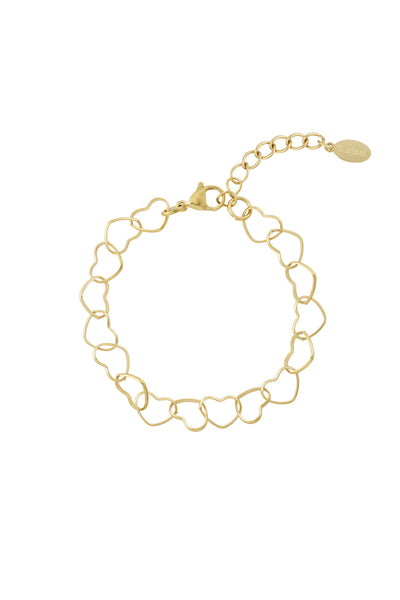
At Corelune [CHECK URL BEFORE PUBLICATION] you'll find necklaces designed for precisely this purpose – in coordinated lengths and thicknesses, all made of 316L with 18k PVD. Also check out the bracelets collection [CHECK URL BEFORE PUBLICATION] – arm layering works on the same principles.
Frequently Asked Questions About Necklace Layering
How many necklaces should one wear when layering?
Two necklaces are a simple, elegant start. Three necklaces are the classic layering look – structured without chaos. Four or more necklaces work, but require more planning: each additional necklace must have a clear role. For everyday wear and summer, two to three necklaces are the sweetest spot.
Can different gold tones be mixed when layering?
Yes, with moderation. Yellow gold and rose gold together create a warm and harmonious look. Yellow gold and silver offer a deliberate contrast – beautiful when one dominates. Three different metal tones simultaneously: that lacks a clear theme. Rule of thumb: one metal tone makes up 70–80 percent of the look, the other is an accent.
Which chains are best suited as the base layer?
Fine cable chains (1–1.5 mm, 38–42 cm) or narrow link chains. They are slender enough not to dominate, but structured enough not to merge with the other chains. Snake chains under 1 mm are also good, but more susceptible to abrasion between the layers.
Can you layer necklaces if you have fresh piercings?
For layering necklaces themselves: no problem – they hang on the neck, not on the piercing. However, if you're also combining earrings (ear stacking): For fresh ear piercings, always use only 316L or titanium. No gold-plated silver, no brass, as long as the piercing is healing.
What to do if necklaces have already tangled?
Don't pull – that tightens the knot. Lay the chain on a smooth surface. Insert two fine needles or toothpicks into the knot and gently push them apart. Alternatively: Put a drop of baby oil on the knot – this reduces the friction of the chain links and makes untangling easier.
Conclusion
Layering necklaces in summer is not just possible – it's the look for this season. The 3-layer formula, the carabiner hack, and the right material are the three things that decide between accidental chain chaos and a styled layering look. Start simple, with two chains that differ in length and texture – and once you get the hang of it, you won't stop.