Moissanite Jewelry: The Sustainable Diamond Alternative Tested

Moissanite is perhaps the most fascinating diamond alternative on the market—and one that many people know too little about. Chemically distinct, visually more brilliant than diamond, hard enough for everyday life, and significantly more affordable than natural gold: Moissanite deserves a closer look than "just" a substitute. In this comprehensive guide, you'll learn everything—the science behind the stone, an honest comparison with diamond, and why Moissanite might be one of the smartest jewelry choices in 2027.
What is Moissanite?
Moissanite is silicon carbide (SiC)—a chemical compound of silicon and carbon that is extremely rare in nature. The stone was discovered in 1893 by Nobel laureate Henri Moissan in a meteor crater in Arizona—hence the name. Natural Moissanite is so rare that it is almost exclusively produced synthetically for jewelry purposes.
Today's Moissanite production is largely carried out by Charles & Colvard (USA) and other manufacturers under controlled laboratory conditions—without mining, without conflict risks, and with a minimal ecological footprint.
Moissanite vs. Diamond: A Direct Comparison
Hardness
Diamond: 10 (Mohs) – the hardest natural mineral
Moissanite: 9.25 (Mohs) – the second hardest mineral in gemology
For everyday jewelry, this difference is practically irrelevant. Moissanite is harder than any other gemstone except diamond and will not scratch during wear.
Brilliance and Fire
Diamond: Refractive index 2.42 – exceptionally high brilliance
Moissanite: Refractive index 2.65 – actually higher brilliance than diamond!
The "fire" (light dispersion into rainbow colors) of Moissanite is also higher than that of diamond. This means: Moissanite actually sparkles more intensely than diamond. For some, this is too much (appears "unnatural"); for others, it is simply beautiful.
Color
Diamond: D (colorless) to Z (yellowish), broad spectrum
Moissanite: Today available in Near-Colorless (G–H equivalent) and Colorless (D–F equivalent). Older generations of Moissanite showed a slight green or yellow tint under certain lighting conditions—newer premium versions no longer exhibit this.
Price
Here the difference is dramatic:
- Natural Diamond (1 ct, G, VS1, Excellent): approx. €4,000–€8,000
- Moissanite (1 ct equivalent, Colorless): approx. €300–€600
Moissanite costs about 10–20 times less than a comparable diamond. For the same price, you can buy a significantly larger Moissanite.
Sustainability
Natural Diamond: Mining with significant ecological impact, potential conflicts in the supply chain
Lab-Grown Diamond: Significantly more sustainable than natural diamond, but still energy-intensive
Moissanite: Lab-created, minimal ecological footprint, completely conflict-free
How to distinguish Moissanite from Diamond?
To the naked eye: Almost impossible. Even experienced jewelers cannot distinguish Moissanite from diamond with the naked eye. With special equipment (diamond tester that measures electrical conductivity), the distinction is possible. However, Moissanite-specific testers are needed, as older diamond testers can falsely identify Moissanite as diamond.
For whom is Moissanite the best choice?
- For anyone who appreciates the sparkle and hardness of diamond but does not have a diamond budget
- For ethically conscious buyers who value conflict-free sourcing and sustainability
- For engagement rings where a larger statement piece is desired
- For people who prefer to invest more money in the setting or other aspects of life
For whom does diamond remain the better choice?
- For anyone for whom the emotional and symbolic value of a genuine, natural diamond is important
- As investment jewelry (Moissanite does not have the same resale value as diamond)
- If tradition and the history of the stone (millions of years in the making) are significant
Moissanite Jewelry: Styles and Settings
Moissanite comes in all cuts available for diamonds:
- Round Brilliant (highest brilliance)
- Oval (very modern, appears larger than it is)
- Cushion (vintage, romantic)
- Emerald Cut (modern, clean lines)
- Pear / Teardrop (elegant, unusual)
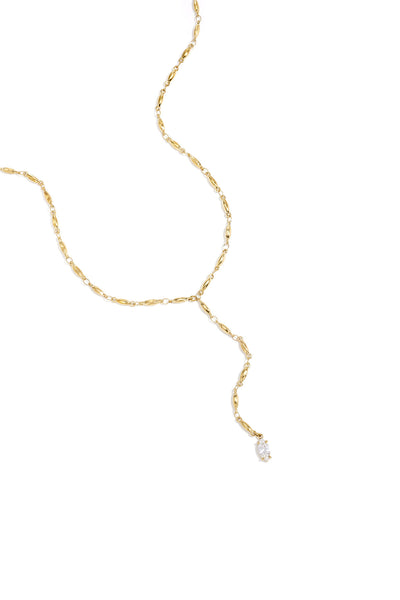
Sparkling Jewelry at Corelune Jewellery
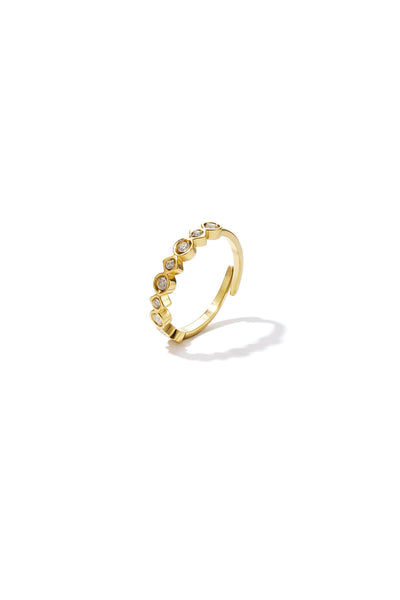
The best choice for your jewelry is one that matches your values, your budget, and your aesthetics. At Corelune Jewellery, you'll find sparkling jewelry for every requirement.
👉 Discover sparkling jewelry now – and shine in your own way!