Jewelry Layering Guide: How to stack necklaces, rings, and bracelets like a pro

Jewelry layering – wearing multiple pieces of jewelry simultaneously in a harmonious combination – is the ultimate discipline of personal style. It looks rich, expressive, and effortlessly casual all at once. But what appears to be randomly thrown-together pieces actually follows clear principles. This comprehensive guide shows you how to layer necklaces, rings, and bracelets like a pro – for every look, from minimalist to maximal.
Why Layering is So Effective
A single piece of jewelry is beautiful – several together make a look. Layering creates depth, movement, and complexity that a single statement piece cannot achieve. It is also extremely flexible: a different combination of the same basic pieces every day results in a new look. That's sustainable jewelry enjoyment.
Part 1: Necklace Layering
The Basic Rule: At Least 5 cm Spacing
Necklaces that are too similar in length get tangled and look messy. At least 5 cm of space between each necklace ensures that each remains individually visible.
Starter Combination for Beginners (2 Necklaces)
- Necklace 1: 40–42 cm (rests on the collarbone)
- Necklace 2: 47–50 cm (rests below the collarbone)
Metal tone: Both yellow gold. Necklace style: Different patterns (e.g., Venetian + anchor chain). This is enough for a thoughtful layered look.
Advanced 3-Necklace Look
- Necklace 1: 38–40 cm choker (or fine chain directly on the neck)
- Necklace 2: 45 cm with a small pendant (star, initial, birthstone)
- Necklace 3: 55 cm (longer, more textured chain or another chain without a pendant)
This look is already very complete and requires no other neck accessories.
Necklace Styles in Layering: What Combines How?
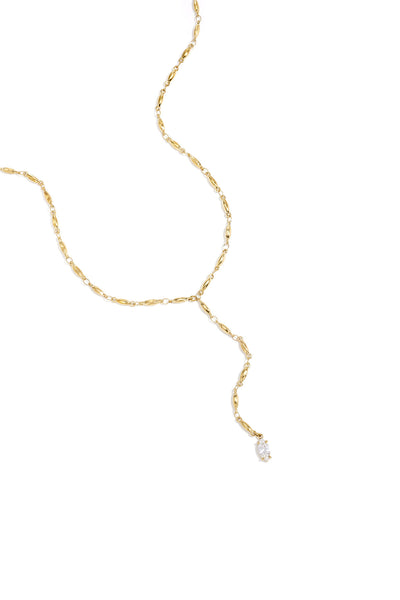
- Fine + fine: Two or three delicate chains = minimalist maximalism
- Fine + medium: One subtle and one slightly stronger chain = elegant contrast
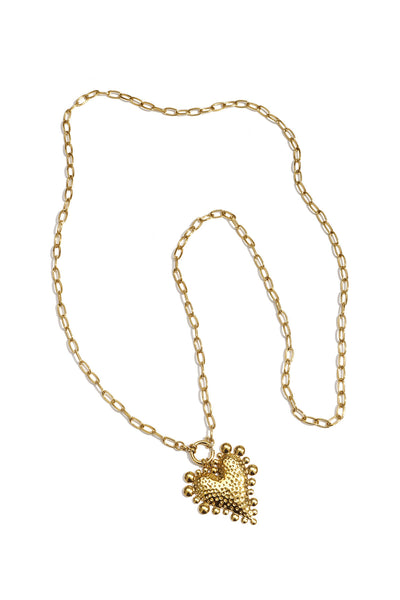
- Fine + bold: A delicate chain as a "base" for a statement chain = multi-layered
- Chains + choker: A velvet ribbon or pearl choker as the base of a chain composition = playful-luxurious
Metal Tones in Necklace Layering
Mono-metal (recommended for beginners): All necklaces in yellow gold or all in silver. Effect: Coherent, elegant, clearly well-thought-out.
Mixed Metals (for advanced): Gold and silver chains together. Needs a "bridge piece" – a chain or pendant that connects both tones.
Part 2: Ring Stacking
The Basic Rule: Uniform Tone, Various Widths
All rings in yellow gold (or all in silver), but in different widths: one wide ring + two narrow ones is more elegant than three equally wide ones.
Starter Stack (2–3 Rings)
- Ring 1: Wide band ring (3–4 mm) as a base
- Ring 2: Thin band ring (1 mm) on the same or adjacent finger
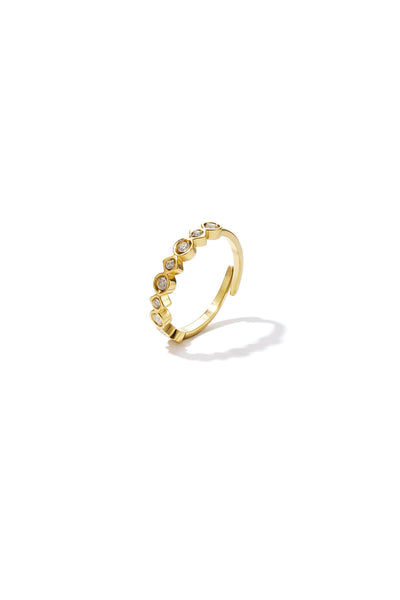
- Ring 3 (optional): Stacking ring with a small stone on another finger
Advanced Stack (4–6 Rings)
- Index finger: Signet ring or statement ring
- Middle finger: Two thin rings stacked
- Ring finger: Wedding ring + thin stacking ring
- Pinky finger: Pinky ring
The art: Not all rings on one hand simultaneously. Distribute them across both hands for balance.
Which Ring on Which Finger?
- Index finger: Self-expression, assertiveness – ideal for statement rings
- Middle finger: Most neutral finger – for the largest ring in the composition
- Ring finger: Traditionally wedding and engagement rings
- Pinky finger: Pinky rings – playful and bold
- Thumb: Thumb rings – very trendy, edgy
Part 3: Bracelet Layering
The Basic Rule: One Anchor Point, Build Around It
Choose an anchor piece – the most important bracelet in the composition (tennis bracelet, engraved bracelet, wider link bracelet). All other bracelets arrange themselves around it.
Starter Bracelet Stack
- Anchor: A gold link bracelet (5 mm) or a tennis bracelet
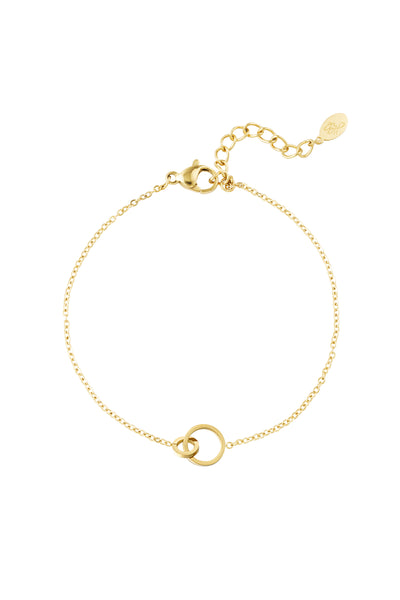
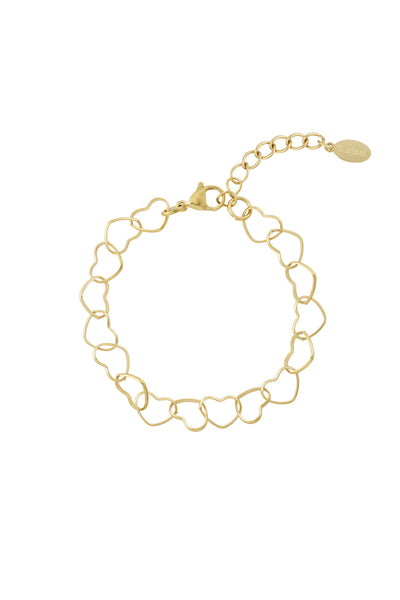
- Addition 1: Thin delicate link bracelet (3 mm)
- Addition 2: Gemstone bead bracelet (rose quartz, moonstone) as a contrast
Combining Bracelet + Watch
- Watch on the left hand + bracelet stack on the right: Asymmetrical and elegant
- Bracelets on both sides of the watch: Balanced and opulent
- Narrow bracelets to the right of the watch: Modern and urban
The Overall Picture: Necklaces + Rings + Bracelets Together
If you want to use all three layering areas simultaneously, one important rule applies: Choose a focal area.
- Strong necklace stack → subtle rings, no bracelet stack
- Opulent ring stack → one fine necklace, one bracelet
- Full bracelet stack → simple necklace, no ring abundance
Everything maximally at the same time – only very experienced stylists can pull this off. For everyone else: One strong accent area, the rest subtle.
Your Layering Pieces at Corelune Jewellery
The most beautiful layered looks begin with coordinated basic pieces. At Corelune Jewellery, you'll find fine necklaces, stacking rings, and delicate bracelets that perfectly complement each other.
👉 Discover layering jewelry now – and create your personal look!