Jewelry Trends 2026: What Really Lasts – and Why That's the Wrong Question
Every year, dozens of articles about jewelry trends appear. Most of them start with a sentence like "These are the five pieces of jewelry you need this year." And by the next year, those same pieces are no longer mentioned – replaced by five new ones.
That's the problem with trend reporting: it optimizes for clicks, not for useful information. Anyone who truly wants to know what's relevant in jewelry in 2026 benefits more from an honest assessment than from a list. That's why this article is structured differently: we first look at what has actually changed, then at what is currently dominant – and finally, at what always works, regardless of trends.
What has truly shifted in jewelry aesthetics from 2025–2026
Looking at the last three to four years, there's a clear movement away from very minimalist, almost invisible jewelry towards a more visible presence. The pendulum has swung – not to the extreme, but noticeably.
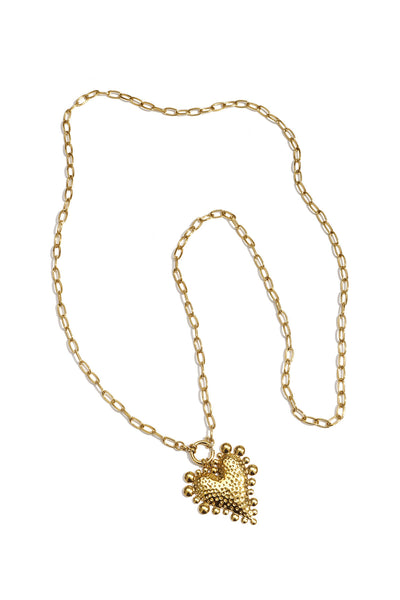
This is specifically evident in the increased width of chains. The ultra-fine 0.8mm chains no longer dominate as clearly as they did from 2021 to 2023. Now, 2mm to 3mm chains exist alongside them on an equal footing, showing presence without ostentation. This is not a contradiction to minimalism – it is its maturity. Clear, but not invisible.
At the same time, yellow gold is the dominant metal of the moment. After years where white gold and silver played the main role, warm yellow gold has returned – in parts of the high-fashion sector, in parts of the everyday market. This is also related to the fact that yellow gold is more photogenic on warm skin tones, which are more represented in fashion imagery than before.
The five jewelry trends of 2026 that have a substantial basis
1. Curated chain layering. Multiple chains worn together is not a new concept, but the way it's interpreted in 2026 is more precise than before. Not "many chains at once," but two to three chains with a clear hierarchy in length and thickness. This looks thoughtful, not randomly thrown together. This trend has substance because it stems from a need for expression and individuality – it won't disappear as quickly as purely fashionable phenomena.
2. Pearls, reinterpreted. Classic pearl necklaces are back – but in different combinations than before. Single pearls on gold chains, pearls mixed with gold links, irregular baroque pearls instead of perfectly round Akoya pearls. This is not a nostalgia trend, but a reinterpretation of a material that never truly disappeared.
3. Organic, handcrafted shapes. A counter-movement to industrial uniformity: rings and bracelets that appear slightly irregular, as if hand-modeled. No perfect spheres, no machine-symmetrical surfaces, but shapes with a visible history of craftsmanship. This is a deeper cultural trend, not a superficial fashion moment.
4. Ear stacking. Multiple earrings on one ear – at different piercing points, if present, or an ear cuff without a piercing as an addition. Asymmetrical ear stylings where both sides are not identical. This has also stabilized: it's no longer an experiment, but an established stylistic device.
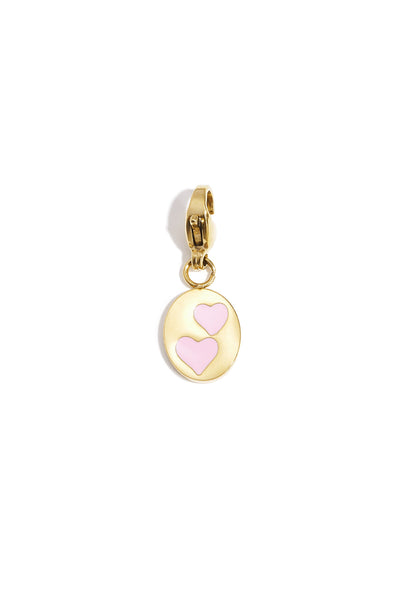
5. Jewelry with meaning. This is less an aesthetic and more a content-driven trend. Birthstone jewelry, zodiac motifs, personalized pieces, symbols with personal reference – the demand for jewelry that says something rather than just looks good has significantly increased. This is not a short-term trend; it's a lasting need.
What's less relevant in 2026 – honestly
Very large, oversized statement necklaces: They had their moment, but the mainstream no longer wears them. They remain strong in certain subcultural contexts, but haven't permanently established themselves as widespread everyday jewelry.
Very playful charm systems in the style of 2015: The nostalgia for this aesthetic exists, but it's clearly marked as nostalgia, not as a contemporary style.
Very flat minimalism that emphasizes invisibility: This was the dominant jewelry style from approximately 2018 to 2022. It still exists, but it now shares dominance with more visible forms of expression.
What always works, regardless of trends
This is actually the most important part of this article.
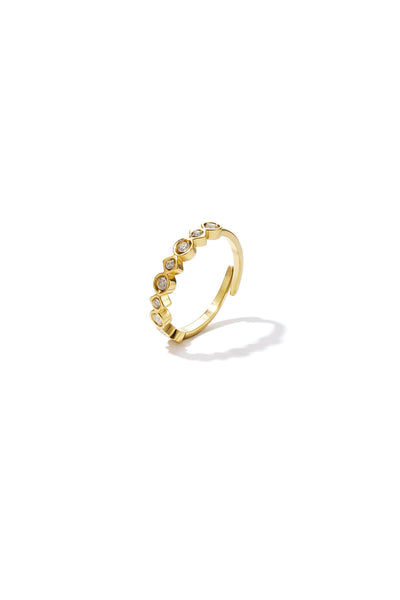
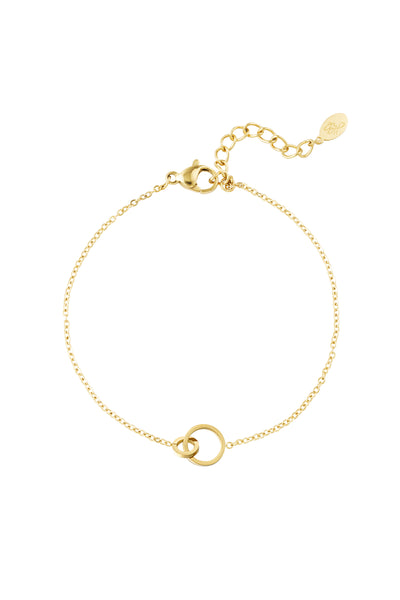
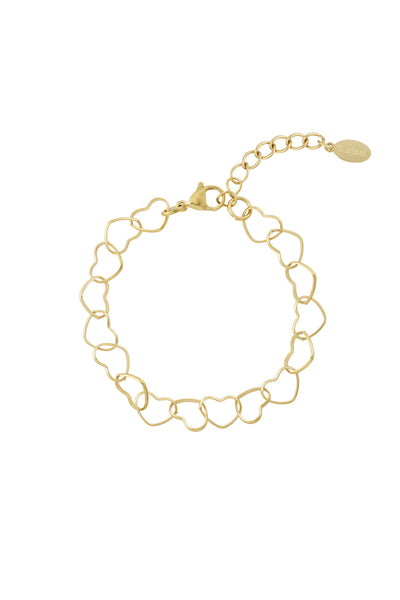
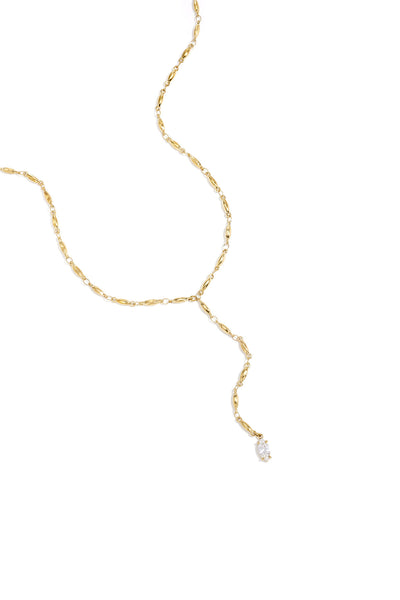
A delicate gold chain in a classic length (45 cm) is never "wrong." It wasn't in 2010, it isn't in 2026, and it won't be in 2035. Simple gold stud earrings at 6 to 8 mm are not a trend, they are an anchor point. A solid gold ring without embellishments is neither old nor new – it just is.
The mistake many people make when buying jewelry: they follow trends, buy pieces that look dated in three years, and develop a bad feeling about their own judgment. The alternative: a solid foundation of timeless pieces, enlivened with individual trendy additions – not the other way around.
Trends are useful as inspiration and as signals: they show where the collective aesthetic currently stands. But they are not mandatory. A piece that suits you and that you want to wear daily is more valuable than the latest trendy piece that you won't take out after six months.
The Corelune collection focuses on pieces that can do both: timeless enough for a foundation, charismatic enough for a unique look. Individual trend interpretations complement it, but do not dominate it.
→ Further reading: Layering chains: How to achieve the perfect look | Buying stud earrings: Which shape suits you?
Frequently Asked Questions about Jewelry Trends 2026
Is yellow gold really back in style?
Yes, significantly so since approximately 2022-2023 – and it continues in 2026. After a long period of silver and white gold dominance, warm yellow gold is more present again in the fashion world and in everyday jewelry. This is not a short-term phenomenon: yellow gold is historically the "most natural" gold, and its periodic returns are well documented in jewelry history.
Are pearls still modern in 2026?
Yes, and in a different way than in previous decades. We're not talking about the strict pearl necklace from the 1950s – but rather pearls in contemporary settings, combined with gold, in asymmetrical designs, or as a single accent. This is a trend with cultural depth that won't disappear quickly.
Should you buy trendy jewelry pieces?
With caution. Trends are inspiration, not a purchase order. If a trendy piece suits you and you know you'll wear it regularly: yes. If it's only interesting because it's everywhere right now: better to wait. Good test: Imagine the piece in three years. Would you still find it beautiful?
What are the most timeless pieces of jewelry?
A simple gold chain 45 to 50 cm long, round gold stud earrings 6 to 8 mm, a plain gold ring without decoration, a delicate gold bracelet or a simple bangle. These five pieces have never lost relevance in the last fifty years and will not in the next fifty either.