Buying an Engagement Ring in 2026: The Complete Guide to the Perfect Ring
Why This Purchase Is Different From All Others
Buying an engagement ring – these three words represent one of the most significant purchasing decisions of your life. Not because of the price, but because this ring carries a promise greater than any other. No other piece of jewelry will be looked at more often, touched more frequently, explained more repeatedly, or photographed more frequently. It sits there, every day, for a lifetime.
This guide will accompany you step by step – from the first question to the perfect moment when you present the ring. No marketing speak, no tricks – just the information you really need.
Step 1: Setting a Realistic and Stress-Free Budget
The old "two-month salary rule" is a marketing construct from the 1930s – invented by De Beers to boost diamond sales. It is not a law, not an obligation, not a measure of love.
The intelligent question is: How much can I spend without bringing financial worries into the relationship? A 700-euro ring bought with joy and worn without a care is more valuable than a 3,000-euro ring that means credit card debt.
Realistic Budget Guidance 2026:
- 600 – 1,500 Euros: 585 yellow gold or white gold, small brilliant (0.20 – 0.35 ct) or colored stone. High quality, beautiful, suitable for everyday wear.
- 1,500 – 3,500 Euros: 750 gold or white gold, 0.40 – 0.70 ct brilliant with GIA certificate. A visible statement, clear quality.
- 3,500 – 8,000 Euros: Platinum or 750 gold, 0.70 – 1.20 ct, Very Good to Excellent cut. Luxury segment, serious investment value.
- 8,000 Euros+: Bespoke pieces, custom designs, larger carat weights. No compromises on any of the Four Cs.
Budget Tip: Invest in a better cut rather than a larger carat weight. A 0.70 ct diamond with an Excellent cut looks more spectacular than a 1.00 ct diamond with a Good cut – and costs significantly less.
Step 2: Truly Understanding Your Partner's Style
The biggest mistake in buying an engagement ring is using your own taste as a benchmark. The ring will not be worn by you – but by the person to whom you are offering it.
How do you find out what she wants without ruining the surprise?
- Analyze Pinterest and Instagram: Has she saved jewelry boards or jewelry posts? These are direct clues without words.
- Observe existing jewelry: Does she wear yellow gold or silver/white gold? Minimalist or elaborate? With stones or without?
- Ask her best friend: Discreet, trustworthy – often the best friend knows details that hardly anyone else does.
- Ask directly: Sounds undramatic, but is often the smartest approach. Many couples explore ring styles together long before an official proposal.
Style Categories for Orientation:
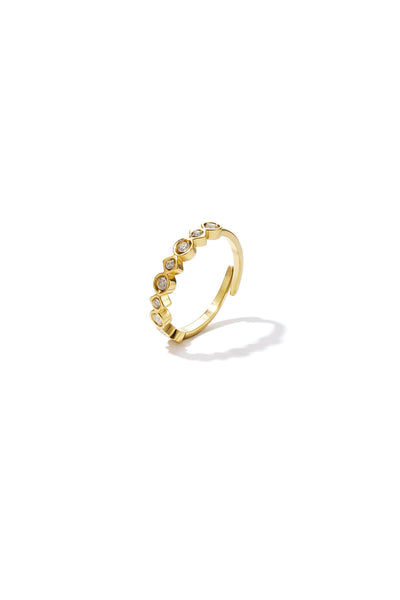
- Minimalist: Simple band, small stone, bezel setting. Less is more – quality speaks for itself.
- Classic-timeless: Round brilliant in prong setting, yellow gold or white gold. Unchangingly beautiful, always right.
- Romantic-feminine: Floral-inspired settings, pavé halos, rose gold. Playful and warm-hearted.
- Modern-avant-garde: East-West setting, geometry, unexpected proportions. For women who want to stand out.
- Vintage: Milgrain, filigree work, antique cuts (Old European, Rose Cut). History as a statement.
Step 3: Choosing the Stone – Diamond or Colored Stone?
The Classic Path: White Diamond
The diamond as an engagement stone has been the standard since the 1940s – and for good reason. No other stone has this combination of hardness (Mohs 10 – indestructible), brilliance (unparalleled light refraction), and universal symbolism. A certified brilliant of good quality brings joy for a lifetime.
The Growing Alternative: Colored Stones
In 2026, more than 30 percent of all engagement ring buyers are not choosing a white diamond. The most popular alternatives and their qualities:
- Sapphire (Mohs 9): Nearly as hard as a diamond. Available in blue, pink, yellow, and orange. Made world-famous by Princess Diana and Kate Middleton. Royal blue in yellow gold – the most timeless statement beyond the brilliant cut.
- Morganite (Mohs 7.5): Delicate pink beryl in rose gold – the most romantic concept of 2026. Cheaper than a diamond, unique in color. Well-suited for daily wear.
- Ruby (Mohs 9): Rarer and more expensive than sapphire in top quality. Symbol of passion. Only buy with a GRS certificate and origin statement.
- Moissanite: Synthetic stone with even greater light refraction than a diamond. 80% cheaper. For couples who want maximum size on a small budget.
- Lab-grown Diamond: Chemically identical to natural diamond. 70% cheaper. Ethically unburdened. IGI or GIA certified.
Step 4: The Four Cs – What Really Matters
When buying a diamond, you will always encounter the Four Cs: Cut, Color, Clarity, Carat. The problem: All four influence the price, but they affect beauty very differently.
Cut: The Most Important C
The cut determines how light enters, refracts, and exits the stone – thus, its brilliance. A perfectly cut diamond of average color and clarity looks more spectacular than a colorless, flawless stone with a poor cut. Never buy below "Very Good." Excellent or Ideal is optimal.
Color: G to H for Most Buyers
The GIA scale ranges from D (completely colorless) to Z (distinctly yellowish). In reality: D, E, F look identical to the naked eye. G and H appear impeccably white in yellow gold settings. Save on color, invest in cut.
Clarity: VS2 is the Golden Mean
FL and IF (flawless) are for collectors – no visible improvement to the naked eye. VS2 and SI1 are optimal: Inclusions are only visible under 10x magnification, and significantly cheaper. Exception: Emerald and Asscher cuts – buy VS1 or better here.
Carat (Weight): Cut Before Size
Carat is weight, not size. A 0.90 ct stone with an Excellent cut looks larger than a 1.00 ct stone with a Poor cut. And the 0.90 ct stone costs 15-25 percent less – because dealers apply a price premium to "round" numbers like 1.00 ct.
Step 5: The Metal – Gold, White Gold, or Platinum?
- Yellow Gold 585 (14K): Robust, warm, classic. Ideal everyday metal. Makes colored gemstones and warm skin tones shine. Cheaper than 750.
- Yellow Gold 750 (18K): More intense color, softer, higher purity. More refined – for a ring that is worn AND admired.
- White Gold 585/750: Cool, modern, makes diamonds appear whiter. Requires rhodium plating every 1-2 years (30-60 Euros).
- Platinum (PT950): The most precious material. Naturally white, nickel-free, hypoallergenic. No rhodium plating needed. Heavier – tangible quality. 40-60% more expensive than white gold.
- Rose Gold 585: Romantic, warm, very popular in 2026. A fantastic combination, especially with morganite.
Step 6: Determining the Correct Ring Size
The biggest logistical challenge when buying an engagement ring as a surprise: the ring size.
Method 1 – The Ring Impression: Carefully borrow a ring she wears on her ring finger. Measure the inner diameter: The diameter in millimeters corresponds to the EU ring size on the standard chart (e.g., 17.3 mm = size 54).
Method 2 – The Paper Method: Place a narrow strip of paper around her finger (while she is asleep or distracted), mark the overlap, measure the length. Length ÷ 3.14 = diameter in mm.
Method 3 – Her Best Friend: She knows or can find out. Agree on confidentiality and ask for support.
Safety Strategy: When in doubt, buy one size larger. Resizing a ring down is easier and cheaper than sizing it up. Free size adjustment within 30 days is standard with reputable jewelers.
Important Notes: Fingers can be up to half a size thicker in the evening than in the morning. The dominant hand often has slightly larger fingers. Wider rings (6mm+) fit tighter – choose half a size larger in that case.
Step 7: The Certificate – Non-Negotiable
Do not buy a diamond over 500 Euros without an independent certificate. Period. The most important grading laboratories:
- GIA (Gemological Institute of America): Global gold standard. Strictest grading standards, highest trust.
- IGI (International Gemological Institute): Preferred certification for lab-grown diamonds. Valid and recognized.
- HRD (Antwerp World Diamond Centre): Belgian institute, also high quality and recognized.
The certificate includes: cut shape, all 4Cs with precise values, stone dimensions, proportions, and for GIA, an additional laser-engraved report number on the girdle of the stone. You can verify this number on gia.edu – free and in seconds.
Step 8: Where to Buy – Online or Brick-and-Mortar?
Buying Online
Online jewelers have no store rent, no large staff – and pass these cost savings on. The same or better quality, 20-40 percent cheaper than brick-and-mortar stores. Prerequisites: Transparent 4C details, GIA certificate number verifiable online, at least a 30-day return policy.
Buying In-Store
The advantage: You hold the ring in your hand, see it in real light, and receive personal advice. For buyers who are uncertain about online purchases or want to try on the ring, this is clearly the better choice – even if you pay more for it.
The Hybrid Strategy
Ideal: Get information and try on rings at a local jeweler. Then buy online if the price difference is significant and the return policy is securely backed.
Step 9: The Engraving – The Detail That Changes Everything
An engraving on the inside of the ring – the date, your initials, a phrase, a promise – makes every ring unique. No other person in the world has exactly this piece. Engraving costs nothing extra with most jewelers and takes 3-5 business days.
Popular Engraving Ideas:
- Date of the first date or proposal
- Both initials + a date
- A phrase from your life – something only you two know
- GPS coordinates of the place where you first met
Step 10: The Moment Itself
You have the perfect ring. Now comes the part that is harder than any research: the moment.
Some timeless advice:
- Choose a quiet moment – no background noise, no distracting guests
- Say what you really want to say – not what you think you should say
- Place the ring on her finger yourself – this is one of life's most intimate rituals
- Forget the photo for this very first moment – be fully present
The ring is the symbol. The moment is the story. Both together are unforgettable.
Common Mistakes When Buying an Engagement Ring – And How to Avoid Them
- Not buying with a certificate: Without GIA/IGI, there's no verifiable value. Always insist on a certificate.
- Wrong budget: Neither too little (compromises you'll regret later) nor too much (financial burden). Calculate honestly.
- Neglecting the cut: Biggest mistake in diamond buying. Cut trumps everything.
- Incorrect size: Better to have it professionally measured than guess. Free adjustment afterwards is cheaper than the wrong size.
- Time pressure: Engraved engagement rings take 1-3 weeks. Don't wait until the last day.
- Projecting your own taste: The ring is for her. What she loves matters – not what you like.
The perfect engagement ring is one she loves and that reminds her of this moment – today, in ten years, and in fifty years. Find it at corelunejewellery.de – with certified stones, all cut shapes, personal engraving, and a 30-day return policy. Free consultation upon request.