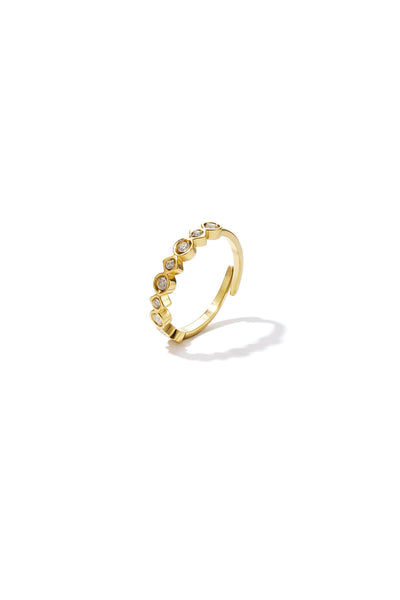
Zirconia vs. Diamond: What's the Difference?

When buying jewelry, you inevitably encounter the question: Zirconia or real diamond? Both stones sparkle, are clear and beautiful – but they differ significantly in terms of production, hardness, price, and sustainability. This guide explains the key differences and helps you make the right choice for your next piece of jewelry.
What is Zirconia?
Cubic Zirconia (CZ) is a synthetically produced material made from zirconium dioxide. It was developed only in the 1970s as a cost-effective diamond alternative and is now the most commonly used diamond simulant in the jewelry industry. Zirconia looks deceptively similar to a diamond but has different physical properties.
What is a Diamond?
A diamond is the hardest naturally occurring substance on Earth (10 on the Mohs scale) and consists of pure carbon in crystalline form. Natural diamonds form under extreme pressure and heat deep within the Earth's crust over millions of years. They are extracted through mining or – an increasingly popular alternative – grown in a laboratory.
The Key Differences at a Glance
Hardness
Diamond: 10 (Mohs scale) – the hardest known material. Zirconia: 8–8.5 – significantly softer, can scratch with intensive wear and become dull over time.
Refraction and Sparkle
Diamonds have a higher refractive index and cast a characteristic white "fire" (light dispersion). Zirconia refracts light more strongly and often shows more rainbow-colored reflections – which some find too artificial. To the naked eye, both are often barely distinguishable.
Weight
Zirconia is about 1.7 times heavier than a diamond of the same size. This is a noticeable difference for experienced jewelry connoisseurs.
Price
Here, the difference is enormous: a high-quality diamond (0.5 ct, good cut) costs several thousand Euros. A zirconia of the same format costs cents to produce and a few Euros in retail. For the mass of affordable fashion jewelry, zirconia is therefore the clear choice.
Durability
Diamond is almost indestructible. Zirconia can become cloudy and get scratches after a few years – especially on rings worn daily. However, for jewelry worn occasionally, the durability is perfectly adequate.
Sustainability
Natural diamonds are associated with significant mining, which has ecological and social consequences. Zirconia, on the other hand, is completely synthetic and has a significantly smaller ecological footprint. Another sustainable alternative is lab-grown diamonds, which are chemically identical to natural diamonds but up to 70% cheaper.
When is Zirconia the better choice?
- For fashion jewelry that you don't wear daily.
- If you want a lot of jewelry on a small budget.
- For travel jewelry, as you don't have to worry about loss or theft.
- For children's and teenagers' jewelry.
- If mining ethics are important to you.
When is a real diamond worthwhile?
- For engagement rings and wedding rings that are worn daily and for a lifetime.
- When value retention and longevity are important.
- As an investment or heirloom passed down through generations.
- When the piece is judged by emotional or symbolic standards.
Zirconia vs. Moissanite vs. Lab-Grown Diamond
Zirconia is not the only diamond alternative:
- Moissanite: Natural silicon carbide, mostly synthetically produced. Harder than zirconia (9.25), sparkles even more than diamond, very sustainable. Priced between zirconia and diamond.
- Lab-Grown Diamond: Chemically identical to a real diamond, certified, but up to 70% cheaper. The best alternative for those who want a real diamond without the high price or ethical concerns.
Find Beautiful Jewelry at Corelune Jewellery
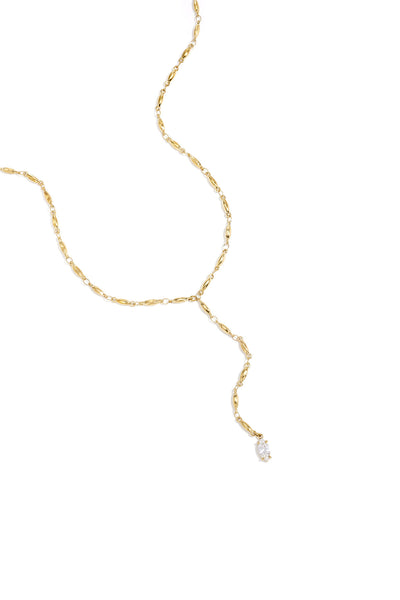
At Corelune Jewellery, we use high-quality materials in our jewelry – communicated transparently. Discover our collection with sparkling stones and find your new favorite piece of jewelry!