Everyday Jewelry: Which Pieces and Materials Truly Last

Everyday jewelry: which pieces and materials really hold up daily. In short: Everyday-ready jewelry has three characteristics: a material with a hardness of around 180 Vickers, smooth shapes without protruding settings, and a lobster clasp instead of a spring ring. Stainless steel and titanium meet these criteria, 585 gold barely, sterling silver and gold-plated brass do not. Everything else is a matter of taste.
As of September 2026. By Phil, Corelune Jewellery, Düsseldorf.
Most people own more jewelry than they wear. The chain that is too heavy. The ring that gets in the way of typing. The earrings that pull after two hours. Everyday jewelry solves exactly this problem, through material and design, not through price.
How to recognize everyday readiness
Material note: Corelune offers fashion jewelry made of stainless steel with gold or silver plating, not precious metals with a fineness stamp. The alloy specifications in this text provide an overview of the market; they do not describe our range. Free shipping from €59, 14-day returns.
The first criterion is hardness. It is measured in Vickers and determines how quickly fine scratches become visible. By the way, the most common place for scratches is not at work, but in the jewelry box, where two chains lie next to each other and rub against each other with every movement.
The second is the design. A smooth surface without prongs does not get caught on sweaters and handbags. Rings with raised stones are a problem in the office and while cooking, not because they break, but because they constantly bump into things.
The third is the clasp. A spring ring wears out from daily opening, a lobster clasp lasts for years. On a piece you never take off, that is the point where it gets lost.
| Material | Hardness (Vickers, approx.) | Traces visible after | Tarnishes |
|---|---|---|---|
| 925 silver | 80 | a few weeks | yes |
| 585 gold | 120 to 180 | a few months | slightly |
| Stainless steel | 180 to 220 | one to two years | no |
| Titanium | approx. 200 | one to two years | no |
| Gold-plated brass | Plating determines | weeks to months | yes, plating wears off |
The pieces that actually work every day
A fine chain with a thickness of 1 to 1.5 millimeters and a length of 45 centimeters lies flat on the collarbone, disappears under any collar, and does not bother you while sleeping. Below that, it becomes fragile; from 2 millimeters, you can feel the weight.
In addition, small stud earrings with a flat closure, a smooth ring without a setting, and a bracelet that moves with the wrist instead of clattering. These are four pieces, and an everyday wardrobe does not need more. Anyone who wants to wear a gold chain permanently will find the limits to this in the article on wearing gold chains daily.
What care really costs
With silver and gold-plated fashion jewelry, expect a few minutes per week: wipe off after wearing, store dry and airtight, polish occasionally. If you do not do this, you will have a different piece of jewelry in front of you after half a year.
With stainless steel, this effort is eliminated. Lukewarm water with a drop of dish soap, once a month, is enough. It does not react with sweat, tolerates chlorine, and has no coating that can come off. That is exactly why Corelune works with it. The honest disadvantage remains: no material value, no reworking by a goldsmith, and hardly any resizing for rings. For an heirloom, gold is the right choice; for the chain that is put on in the morning and not searched for in the evening, it is not.
One rule applies to all materials: jewelry is put on last and taken off first. Otherwise, cream, perfume, and hairspray settle on the metal and dull the shine. Which materials do not tarnish at all is explained in the material guide for tarnish-free jewelry.
What good everyday jewelry costs
Under 30 euros, you usually get gold-plated brass that loses its color within months. Between 30 and 120 euros is the range where stainless steel and sterling silver compete, and there, the decision is a question of willingness to care for it. Over 200 euros, it becomes occasion jewelry, which is exactly why it is worn less often.
Calculated by wear days, the calculation turns around: a 25-euro chain that is stained after four months costs more per day than a 60-euro one that lasts three years. The detailed comparison is in the article on the pros and cons of stainless steel jewelry.
This is how it looks in the range: Long Heart Silver Chain in Stainless Steel and Silver Pendant Chain in Stainless Steel. You can find more necklaces in the category Everyday Necklaces.
Overview of material, dimensions, and prices
Showering, swimming, and sports do not affect stainless steel; it does not tarnish. For reference, here are the values from the Corelune range.
| Feature | Value |
|---|---|
| Material | Stainless steel (RVS 304 or RVS 316), nickel-free, waterproof, and tarnish-free |
| Gold plating | 14 karat, 2.5 micrometers on stainless steel |
| Chain lengths | Choker 32 cm to 36 cm, standard 37 cm to 45 cm, long from 46 cm |
| Ring sizes | 16 mm to 19 mm inner diameter, many adjustable |
| Prices | most pieces between €30 and €36, no piece over €65 |
| Multiple pieces | 20% from 2 pieces, 25% from 3, 30% from 4, 35% from 5 |
| Shipping | free from €59, 2 to 5 business days to Germany, 14-day returns |
Frequently asked questions
Which jewelry is really sturdy enough for every day?
Stainless steel and titanium, both around 200 Vickers. They only show visible traces after one to two years and react neither with sweat nor with chlorine. 585 gold also works, but needs occasional cleaning because the alloy components darken.
Can I leave everyday jewelry on when showering and exercising?
With stainless steel and titanium, yes, water and sweat do not affect them. With silver and gold-plated pieces, you should take them off, because soap residue accelerates tarnishing and chlorine attacks the gold layer. You generally take rings off during strength training, otherwise they will deform.
Why does my jewelry get scratched, even though I am careful?
Because most scratches occur during storage. Two pieces in the same box rub against each other with every movement, and harder metal grinds down softer metal. Putting each piece in its own compartment or a small pouch prevents more traces than any caution in everyday life.
Is it worth buying several identical pieces?
Yes, if you wear one piece daily. Two identical pieces worn alternately last significantly longer together than one in continuous use, because the stress on the clasp and contact surfaces is distributed.
Regarding the terms: free shipping from €59, 14-day return policy.
Discover stainless steel necklaces
About the author
Phil runs Corelune Jewellery in Düsseldorf and has been working daily with stainless steel jewelry since 2024: sample testing, complaints, wear tests in everyday life. The information in this article comes from the in-house range and from what customers report. Where Corelune does not offer something, that is also stated here.
Which categories fit this topic?
From the range, the following fit:
Discount by quantity: 20% for two pieces, 25% for three, 30% for four, 35% for five. Over 59 euros, shipping is included. A combination of two pieces covers more occasions than a single piece.
View women's silver jewelry at Corelune
More on the topic
- Wearing a gold chain daily: what the material withstands and what it costs
- Women's everyday jewelry: The 12 best gold jewelry pieces for every day
- Buying partner bracelets: what couples really wear daily
Matching this in the shop: Charm Bracelet Pattern Silver in Stainless Steel and Charm Bracelet Mystic Tides Gold in Stainless Steel, plus all models under Waterproof Jewelry. Free shipping from €59, 14-day returns.
At Corelune: Free shipping from €59, 14-day returns, shipping from the Netherlands.
Mehr entdecken: Waterproof jewelry
 Stainless Steel Shell Charm Bracelet
€34,95
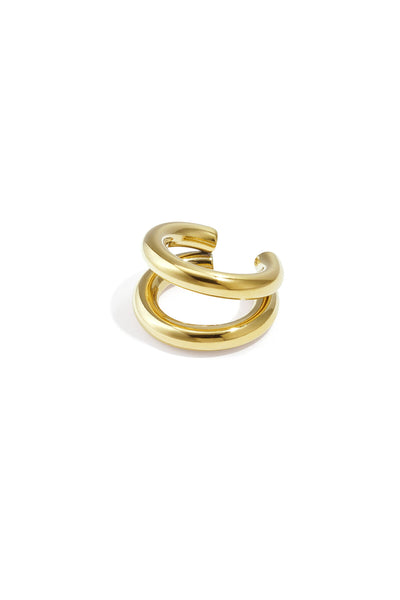 Stainless Steel Grooved Ear Cuff
 Gold and silver stainless steel hoop earrings, model 4
€35,95
 Gold and silver stainless steel cross stud earrings with crystal stones
€28,95
 Gold-tone stainless steel star pendant necklace with zirconia
€31,95
 Gold and silver stainless steel letter pendant necklace
€33,95
 Long gold stainless steel cross necklace
€39,95
 Gold seashell drop earrings made of stainless steel, model 2
€31,95